
Hyderabad, long admired for its bustling tech hubs and well-planned core, is now seeing a rapid surge in growth across its outskirts. Areas once considered peripheral are transforming into prime real estate, prompting the government to adjust its approach. Chief Secretary K Rama Krishna Rao recently emphasized the need for future-ready planning during his site reviews of the Budvel and Neopolis layouts, two high-priority zones in the city’s expanding landscape.
With Chief Minister Revanth Reddy poised to inaugurate new infrastructure like the trumpet interchange at Shankarpally and land auctions underway in these zones, Hyderabad’s suburban blueprint is being redrawn.
A Shift in Urban Boundaries: Hyderabad’s Rapid Suburban Expansion
The last two decades have reshaped Hyderabad’s map. Neighborhoods that once lay beyond the Outer Ring Road (ORR) are now buzzing with real estate activity, IT campuses, and planned communities. This decentralization isn’t accidental; it’s the result of strategic planning combined with organic urban sprawl.
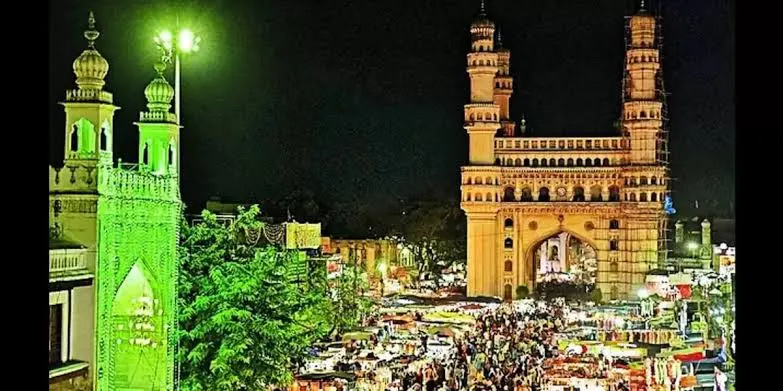
- Areas like Kokapet, Budvel, and Shankarpally are at the forefront of this transformation.
- Real estate values in these zones have increased significantly, attracting developers and investors.
- The Outer Ring Road (ORR) has become the spine of this expansion, connecting peripheral zones with Hyderabad’s urban core.
What’s emerging is a polycentric Hyderabad one with multiple thriving urban nodes instead of a singular center. But this shift demands foresight and planning.
Future-Proofing Infrastructure: CS Rao’s Directive to Urban Planners
During his visit to Shamshabad municipality, Chief Secretary K Rama Krishna Rao delivered a clear message: urban development must anticipate future demands, not just current needs. The days of reactive planning are over.
Planners were asked to:
- Design roads and drainage systems that can accommodate population spikes.
- Integrate sustainable infrastructure, such as underground electrification and green zones.
- Ensure that public services, like water supply and sewage systems, are scalable.
Action Points from the Meeting:
- HMDA’s layouts will now include multiple-use zones with commercial, residential, and recreational blends.
- Focus on eco-parks and open spaces, such as the one being developed in Kothwalguda.
- Prioritize connectivity with ORR, ensuring smooth traffic movement and direct accessibility.
These decisions aim to ensure that Hyderabad doesn’t just grow, it grows intelligently.
Budvel Layout: A Case Study in Modern Zoning
The Budvel layout, currently under development by HMDA, offers a glimpse into what future-ready planning looks like. It is being designed not just as a residential zone but as a multi-use urban module that caters to businesses, residents, and commuters alike.
Key features include:
- 45m and 36 m-wide roads for seamless traffic flow.
- Direct ORR access via a trumpet-like interchange structure.
- Fully underground electrification and a robust drainage network.
Additionally, the 1.6-km service road under construction aims to bridge a critical connectivity gap between the Rajendranagar North and South ORR toll plazas. This kind of integrated planning ensures smoother logistics and emergency response capabilities.
Shankarpally Trumpet Interchange: A Game-Changer for Regional Access
The upcoming inauguration of the trumpet interchange at Shankarpally by Chief Minister Revanth Reddy signals a major shift in how regional traffic will flow into Hyderabad’s rapidly developing outskirts. This isn’t just another road project, it’s a strategic intervention aimed at easing congestion, improving accessibility, and linking upcoming layouts like Budvel and Neopolis with the city’s core infrastructure. The interchange, shaped like a trumpet to facilitate smooth directional movement, is designed to provide seamless entry and exit points to the Outer Ring Road (ORR), especially for commuters from west Hyderabad and emerging suburban clusters.
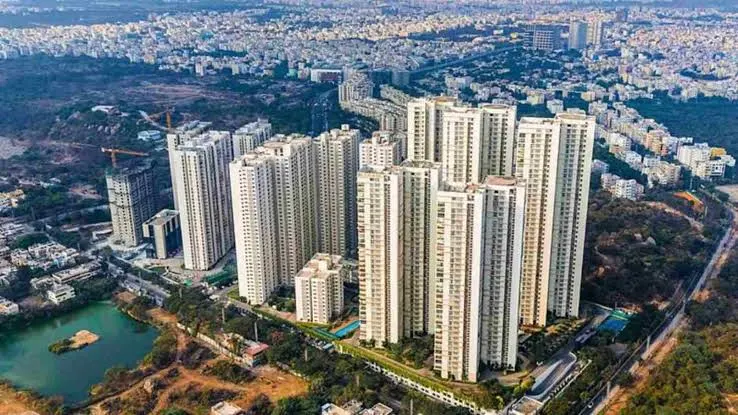
With real estate projects booming along these corridors, this interchange could significantly reduce travel time and boost commercial viability in adjacent layouts. It’s a tangible step toward building a truly connected, multi-nodal urban region one where suburbs are no longer secondary, but essential parts of Hyderabad’s future.
Neopolis Layout at Kokapet: Building Global-Standard Infrastructure
Another crucial site reviewed was the Neopolis layout in Kokapet, known for its premium land parcels and close proximity to the Financial District. What sets Neopolis apart is the adherence to AASHTO standards, a global benchmark in highway design.
Key Infrastructure Highlights:
- Trumpet-like directional ramps are designed for optimal vehicle flow.
- Connectivity upgrades to ensure direct ORR access, reducing commute times significantly.
- Seamless transition between commercial, residential, and recreational spaces.
Neopolis is not just about real estate; it’s about building a live-work-play ecosystem that’s ready for the next generation of Hyderabadis.
The Importance of Eco-conscious Urban Development:
A quieter but equally important part of the Chief Secretary’s visit was the eco-park at Kothwalguda. In the middle of all the construction and expansion lies a question how green will Hyderabad’s future be?
CS Rao highlighted the necessity of:
- Preserving green cover even as the city expands.
- Creating sustainable zones where natural topography is retained.
- Including eco-parks, walking tracks, and water bodies as mandatory components in new layouts.
It’s a balancing act growth vs. green and Hyderabad seems determined not to repeat the environmental mistakes of other growing metropolises.
Leadership-Driven Planning: CS Rao’s Ground-Level Engagement
What sets this recent wave of development apart is the direct involvement of senior leadership. Chief Secretary K Rama Krishna Rao’s visit to Budvel, Neopolis, and Kothwalguda wasn’t a routine inspection, it was a signal of intent. At a time when cities often struggle with the lag between planning and execution, Hyderabad’s administrative leadership is taking a more hands-on, anticipatory approach. Rao’s emphasis on “future-ready” infrastructure shows a clear understanding of urban growth patterns, potential bottlenecks, and the need for climate-resilient public utilities.
His interactions with HMDA officials, local municipal bodies, and the district collector were not just formalities they reflected a collaborative style of governance that’s essential when planning for decades ahead. This level of engagement from the top ensures that layouts like Budvel and Neopolis won’t be isolated zones but well-integrated components of Hyderabad’s evolving urban fabric.
Public Auctions and Investment Potential:
With the HMDA announcing land auctions in Budvel and Neopolis, real estate in these areas is poised to boom. These plots, backed by high-standard infrastructure, attract not only local builders but also national and international investors.
What makes these auctions special:
- The layouts are pre-approved with complete infrastructure plans.
- Investors get immediate connectivity benefits via ORR and other arterial roads.
- The government’s proactive involvement gives regulatory clarity and confidence.
It’s not just land; it’s an investment in Hyderabad’s next decade of growth.
Conclusion:
The message is clear, Hyderabad isn’t just growing outward; it’s growing smarter. From Budvel to Neopolis, the city’s peripheries are being reimagined with a future-first mindset. With top-level reviews from CS Rao and upcoming launches like the Shankarpally interchange, this isn’t expansion for the sake of it, it’s thoughtful urban evolution.
For citizens, this means more housing choices, improved transport, and better amenities. For policymakers, it’s a challenge and an opportunity to get ahead of the curve and shape a truly livable, sustainable Hyderabad.
FAQs:
Hyderabad’s IT boom, improved connectivity via the Outer Ring Road, and land availability have made the outskirts more attractive for residential and commercial development.
Budvel layout is designed as a mixed-use zone with wide roads, underground electrification, and direct ORR connectivity through a trumpet interchange.
Neopolis follows global AASHTO highway design standards and offers a balanced infrastructure model integrating living, working, and recreational spaces.
Senior government officials, including the Chief Secretary, are actively involved in reviewing plans, ensuring quality infrastructure, and conducting pre-approved land auctions to attract investments.
Not necessarily. The inclusion of eco-parks like the one at Kothwalguda and CS Rao’s emphasis on sustainable planning suggests that environmental concerns are being addressed proactively.